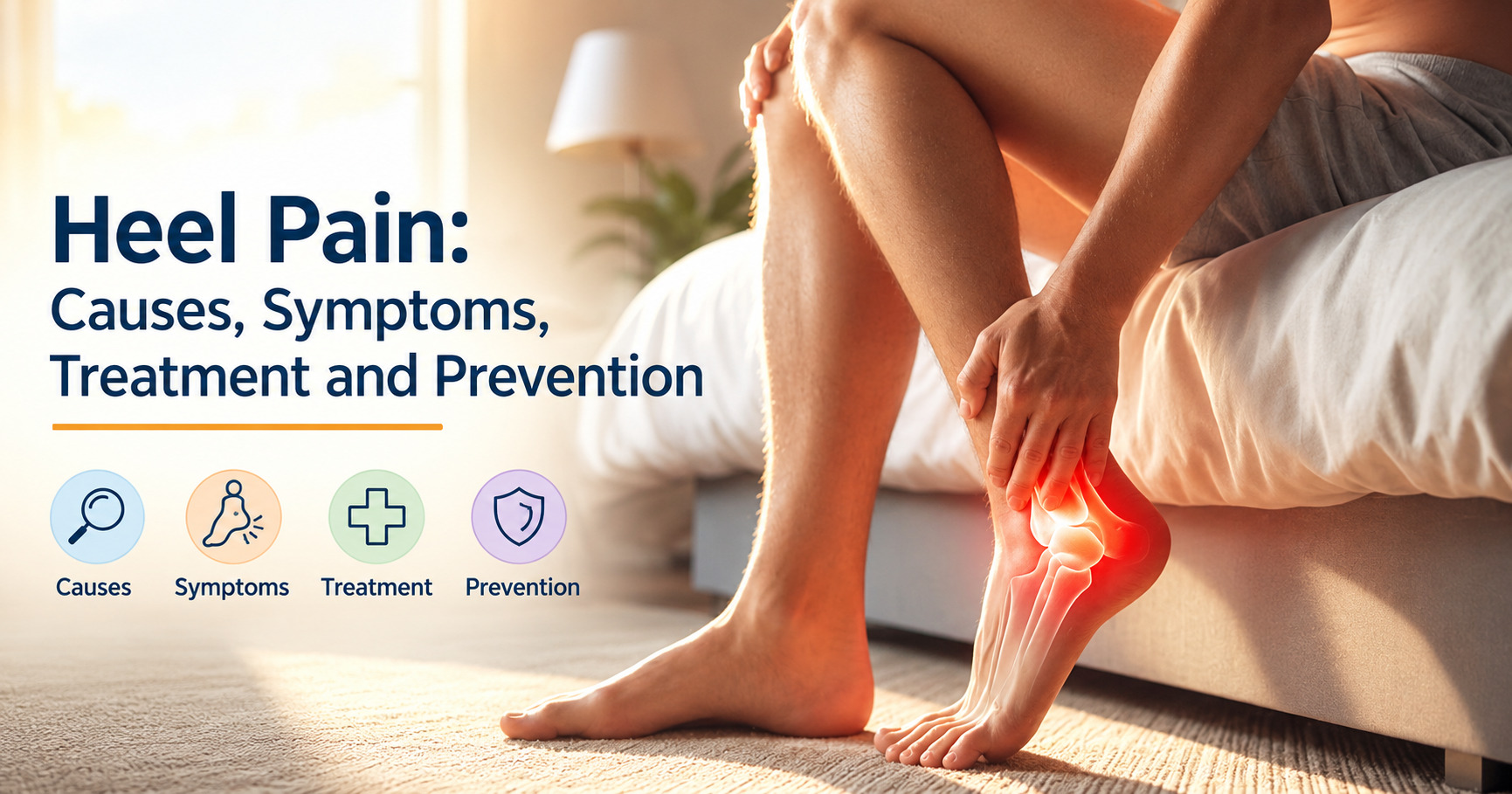
Heel pain is a common problem that can make everyday activities such as walking, standing, exercising, and climbing stairs uncomfortable. It may begin as mild discomfort after a long day or develop into persistent pain that affects your daily routine. Although heel pain is often associated with plantar fasciitis, several other conditions can also cause discomfort in the heel.
Understanding the cause of heel pain is the first step towards finding the right treatment. Factors such as footwear, prolonged standing, increased physical activity, foot structure, and certain medical conditions can contribute to the problem. While mild symptoms may improve with appropriate rest and activity modification, persistent or severe pain should not be ignored.
At Step Ahead Clinic, understanding the source of foot and heel pain is an important part of planning appropriate orthopedic care. This guide explains the common causes, symptoms, treatment options, and preventive measures that can help you take better care of your feet.
What Is Heel Pain?
Heel pain refers to discomfort in or around the heel bone, which supports body weight during standing, walking, and running. The pain may occur underneath the heel, behind it, or along the sides of the foot.
The location of the pain often provides useful clues about its possible cause. For example, pain beneath the heel may be associated with plantar fasciitis, while pain at the back of the heel can be related to the Achilles tendon.
Heel pain can affect people of different ages and activity levels. Runners, athletes, people who stand for long periods, and individuals who suddenly increase their walking routine may be more likely to experience certain types of heel problems.
However, heel pain is not always caused by overuse. Injuries, nerve problems, and other medical conditions may also contribute to symptoms. Identifying the underlying cause helps determine the most suitable treatment approach.
Common Causes of Heel Pain
Several conditions can lead to heel pain. The most appropriate treatment depends on the location of the pain, how long it has been present, and the findings of a clinical examination.
1. Plantar Fasciitis
Plantar fasciitis is a common cause of pain underneath the heel. The plantar fascia is a strong band of tissue that connects the heel bone to the front of the foot and helps support the foot’s arch.
Repeated stress on this tissue can cause pain, particularly near its attachment to the heel. People with plantar fasciitis often experience discomfort during their first few steps in the morning or after sitting for a long time.
Symptoms may improve temporarily after walking but can return following prolonged standing or physical activity.
2. Achilles Tendinitis
The Achilles tendon connects the calf muscles to the heel bone. When this tendon becomes irritated due to repeated loading or a sudden increase in activity, pain may develop at the back of the heel.
Symptoms can include tenderness, stiffness, and discomfort during running, jumping, or climbing stairs. Appropriate assessment is important because different Achilles tendon problems may require different management strategies.
3. Heel Bursitis
Bursae are small, fluid-filled sacs that help reduce friction between tissues. Irritation of a bursa near the heel can cause pain, swelling, and tenderness.
Heel bursitis may develop due to repeated pressure, unsuitable footwear, or irritation around the Achilles tendon. Treatment depends on the location and severity of the problem.
4. Heel Spurs
A heel spur is a bony growth that may develop on the heel bone. It can be seen on an X-ray, but it does not always cause pain.
Many people with heel spurs also have plantar fasciitis. The presence of a spur alone does not establish the cause of symptoms or mean that surgery is necessary.
5. Stress Fractures
A stress fracture is a small crack in a bone that can develop due to repeated loading. It may occur when someone suddenly increases running, walking, or other weight-bearing activities.
Pain may gradually worsen during activity and become more persistent. If a stress fracture is suspected, medical assessment is important before returning to exercise.
6. Foot Structure and Unsuitable Footwear
Flat feet, high arches, and certain walking patterns can affect how pressure is distributed across the foot. Shoes that do not provide suitable cushioning or support may also contribute to discomfort.
However, foot shape and footwear are only some of the possible factors. A proper assessment helps determine whether they are relevant to an individual’s symptoms.
Symptoms of Heel Pain You Should Not Ignore
Heel pain can vary from mild tenderness to severe discomfort that makes walking difficult. Recognising the pattern of symptoms can help you decide when to seek medical advice.
Common symptoms include:
- Pain underneath or behind the heel.
- Sharp discomfort during the first steps after waking up.
- Pain after prolonged standing or walking.
- Tenderness when pressure is applied to the heel.
- Stiffness around the heel or calf.
- Swelling or redness near the painful area.
- Discomfort during running, jumping, or other physical activities.
- Pain that returns after periods of rest.
The timing of the pain can provide useful information. For example, plantar fasciitis commonly causes pain with the first steps after rest, while Achilles tendon problems may cause discomfort at the back of the heel.
These patterns are not enough to confirm a diagnosis. If symptoms persist, worsen, or interfere with normal activities, consult a qualified healthcare professional.
How Is Heel Pain Diagnosed?
Finding the cause of heel pain is important because different conditions may produce similar symptoms. A healthcare professional may use several methods to evaluate the problem.
Medical History
The assessment may begin with questions about when the pain started, where it occurs, whether it is worse in the morning, and which activities make it better or worse.
Your doctor may also ask about recent injuries, exercise routines, footwear, medical conditions, and previous episodes of heel pain.
Physical Examination
The examination may include checking the heel for tenderness, swelling, and movement limitations. The doctor may also assess foot structure, ankle movement, calf flexibility, and walking patterns.
Imaging Tests
Imaging is not necessary for every case of heel pain. Depending on the symptoms and examination findings, an X-ray, ultrasound, or MRI may be recommended to investigate a suspected bone injury or soft-tissue problem.
A stress fracture, for example, may not always be visible on an early X-ray. The doctor will decide whether additional testing is needed.
Heel Pain Treatment Options
Heel pain treatment depends on its underlying cause, severity, duration, and effect on daily activities. Many cases can initially be managed with non-surgical measures, while certain injuries or persistent conditions may need further evaluation.
1. Rest and Activity Modification
Reducing activities that aggravate the pain can help prevent additional stress on the affected tissues. This may involve temporarily limiting running, jumping, long walks, or prolonged standing.
Complete inactivity is not always necessary. The appropriate level of activity depends on the diagnosis and should allow recovery without unnecessarily aggravating symptoms.
2. Supportive Footwear
Shoes with suitable cushioning, a comfortable fit, and appropriate support may help reduce pressure on the heel.
Avoid repeatedly wearing footwear that causes discomfort. Some people may benefit from heel cups or arch-supporting insoles, depending on their foot structure and condition.
3. Stretching and Physiotherapy
Specific exercises may help improve calf flexibility, ankle mobility, and foot strength. For plantar fasciitis or certain Achilles tendon problems, a physiotherapist may recommend an individualised stretching and strengthening programme.
Exercises should be appropriate for the condition. Avoid forcing a stretch or continuing an exercise that causes sharp or worsening pain, especially if an injury has not been ruled out.
4. Ice Application
For some types of heel pain, applying a cold pack wrapped in a towel for short periods may help relieve discomfort after activity.
Do not apply ice directly to the skin. People with reduced sensation or circulation problems should seek medical advice before using cold therapy.
5. Medication
Depending on the cause of the pain, a doctor may recommend suitable medication for short-term symptom relief. Not all medicines are appropriate for everyone, particularly people with kidney problems, stomach ulcers, cardiovascular conditions, or those taking other medications.
Consult a healthcare professional before using pain-relief medication regularly.
6. Additional Treatments
If symptoms continue despite appropriate conservative care, further options may be considered based on the diagnosis. These can include supervised rehabilitation, selected injection-based treatments, or other specialist interventions.
Surgery is usually considered only for specific conditions when it is clinically appropriate and other suitable treatments have not provided sufficient relief. It is not routinely required for most cases of plantar fasciitis.
For more information, visit the Heel Pain Treatment in Baner page on the Step Ahead Clinic website.
When Should You See a Heel Pain Specialist?
Occasional mild discomfort may improve with appropriate activity modification. However, persistent heel pain deserves medical attention, particularly when it affects walking or everyday activities.
Consider seeking an assessment if:
- Your heel pain continues despite basic self-care.
- The pain keeps returning.
- You experience severe or worsening discomfort.
- Heel pain limits your ability to stand or walk.
- You notice numbness, tingling, or unusual weakness.
- You have diabetes and develop new foot pain or a wound.
- Your symptoms began after a significant injury.
Seek prompt medical attention if you cannot bear weight on the affected foot, experience severe pain after an injury, or notice significant swelling or deformity.
A heel pain specialist can evaluate your symptoms and help determine whether the problem is related to plantar fasciitis, the Achilles tendon, a bone injury, or another condition.
If you are looking for specialist evaluation, explore the Heel Pain Specialist in Baner page for more information about Step Ahead Clinic’s foot and heel care services.
How to Prevent Heel Pain
Although not every cause of heel pain can be prevented, several everyday habits may help reduce the risk of developing or aggravating symptoms.
Wear Comfortable, Supportive Shoes
Choose footwear that fits properly and provides suitable cushioning for your daily activities. Replace worn-out shoes when they no longer offer adequate support.
Increase Exercise Gradually
Avoid suddenly increasing your walking distance, running speed, or workout intensity. Gradual increases allow your body time to adapt to additional physical demands.
Stretch Appropriately
Gentle calf and foot stretches may help maintain flexibility. If you already have heel pain, ask a healthcare professional which exercises are suitable for your condition.
Take Breaks From Prolonged Standing
If your work requires long periods of standing, take appropriate breaks when possible. Comfortable footwear and changes in activity may help reduce repeated pressure on the heel.
Maintain Overall Foot Health
Pay attention to recurring discomfort, changes in walking patterns, and footwear that causes pain. People with diabetes should follow recommended foot-care practices and seek prompt advice about new wounds or unusual symptoms.
Listen to Your Body
Pain that repeatedly returns after activity may indicate that the current exercise level or footwear needs adjustment. Avoid pushing through significant pain without understanding its cause.
Why Choose Step Ahead Clinic for Heel Pain Care?
Heel pain can interfere with work, exercise, and everyday movement. Understanding the source of the pain is an important part of choosing appropriate care.
Step Ahead Clinic provides orthopedic and pain-management services, including care for foot and ankle conditions. An individual assessment can help identify possible causes of heel pain and determine whether footwear changes, rehabilitation, further investigations, or other treatments may be appropriate.
The clinic’s services include the evaluation and management of heel pain and other orthopedic concerns. The treatment approach should be based on the individual’s symptoms, examination findings, and medical needs rather than a one-size-fits-all solution.
To learn more about the clinic, its team, and its services, visit the Step Ahead Clinic homepage.
Frequently Asked Questions About Heel Pain
1. What is the most common cause of heel pain?
Plantar fasciitis is a common cause of pain underneath the heel. However, Achilles tendon problems, bursitis, stress fractures, and other conditions can also cause heel pain. The correct cause depends on the symptoms and clinical examination.
2. Why does my heel hurt when I wake up in the morning?
Pain during the first few steps after waking up is a common symptom of plantar fasciitis. The discomfort may improve as you begin moving but return after prolonged standing or activity. Other conditions can cause similar symptoms, so persistent pain should be assessed.
3. Can heel pain go away on its own?
Some mild cases improve with appropriate rest, activity modification, and supportive footwear. However, persistent or worsening pain may require professional evaluation to identify the cause and guide treatment.
4. Is walking good for heel pain?
It depends on the underlying condition and the severity of the pain. Short, comfortable walks may be suitable for some people, while excessive walking can aggravate symptoms. Avoid activities that cause significant pain and seek advice if walking becomes difficult.
5. What is the difference between plantar fasciitis and a heel spur?
Plantar fasciitis involves irritation and overload of the plantar fascia, the tissue supporting the arch of the foot. A heel spur is a bony growth on the heel bone. A spur may be present without causing symptoms, and both conditions can occur together.
6. Do I need surgery for heel pain?
Most cases of plantar fasciitis improve without surgery. Surgical treatment may be considered for selected conditions when appropriate non-surgical management has not helped sufficiently. The decision depends on the diagnosis and individual circumstances.
7. When should I consult a heel pain specialist?
Consult a healthcare professional if heel pain persists, repeatedly returns, becomes severe, or affects your ability to walk. Pain after an injury, an inability to bear weight, or new foot problems in someone with diabetes may require prompt assessment.
Conclusion
Heel pain can make simple daily activities uncomfortable, but understanding its cause is the first step towards effective management. Conditions such as plantar fasciitis, Achilles tendon problems, bursitis, and stress fractures can cause similar symptoms, so an accurate assessment is important.
Appropriate footwear, activity modification, suitable stretching, and a personalised treatment plan may help many people manage heel pain. However, persistent or severe symptoms should not be ignored, particularly when they interfere with walking or everyday activities.
If heel pain is affecting your daily routine, visit Step Ahead Clinic to learn more about its orthopedic and foot care services. You can also explore Heel Pain Treatment in Baner and Heel Pain Specialist in Baner for more information.
Medical Disclaimer: This article is intended for general educational and informational purposes only. It does not replace professional medical advice, diagnosis, or treatment. Always consult a qualified healthcare professional for individual medical concerns. Seek prompt medical attention for severe pain, significant injury, or difficulty bearing weight on the affected foot.